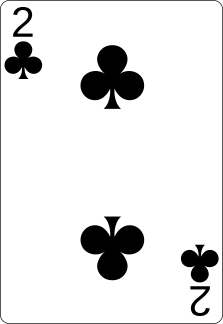
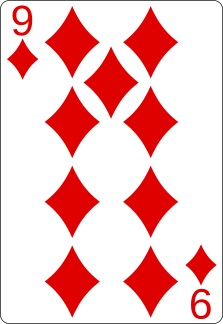
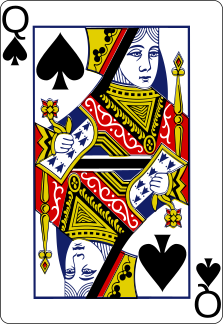
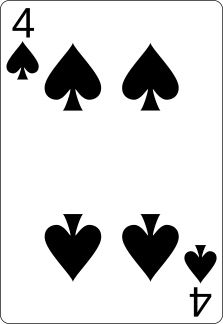
How to play Pyramid
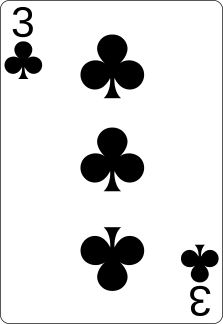
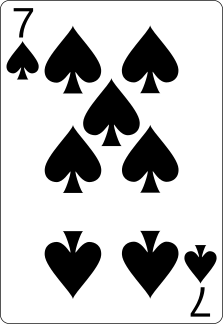
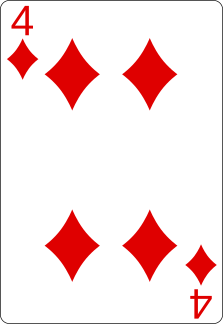
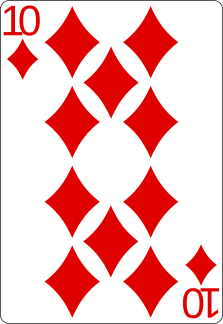
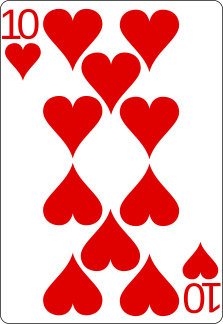
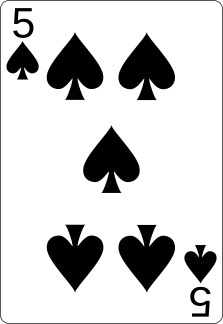
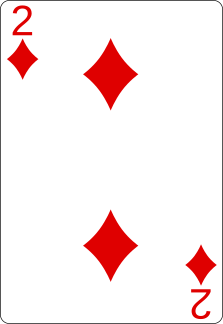
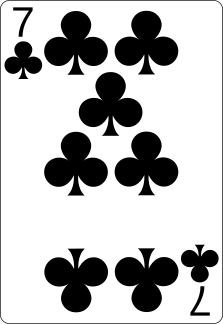
The 28 cards form a pyramid. The goal is to remove them all by matching pairs of cards that sum to 13.
History & origin of Pyramid
Pyramid belongs to the “matching” family of patiences — games where you don’t build sequences but pair cards that add up to a target, here 13. It appears in patience collections since at least the 19th century, and its Egyptian pyramid shape gave it both its name and its lasting visual appeal.
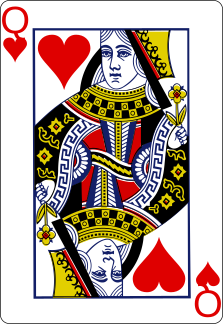
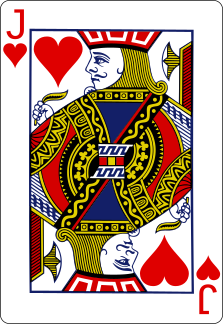
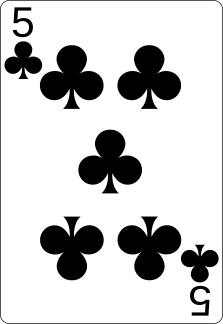
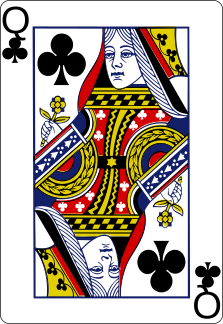
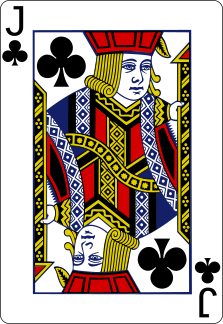
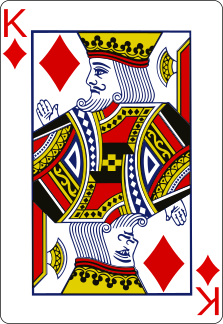
The rule is simple and quick: Ace = 1, Jack = 11, Queen = 12, King = 13. Kings leave on their own; every other card pairs up to 13. That accessibility made it a staple of solitaire collections and, later, of digital solitaire suites.
Unlike Klondike or FreeCell, Pyramid leans heavily on the luck of the deal — many pyramids simply can’t be fully cleared — so it is often played as a light, fast game. Variants like the two-pass version ease that by letting you go through the stock again.
Facts about Pyramid
- The values: Ace = 1, Jack = 11, Queen = 12, King = 13. Kings are removed alone; every other pair must add to 13.
- It is more luck than skill: many deals can’t be cleared, so it works best as a quick, casual game.
- The pyramid of 28 cards has seven rows; only fully uncovered cards — with nothing on top — can be played.
- The two-pass variant lets you recycle the stock once — a small mercy that raises the odds.
How to play Pyramid step by step
- Goal: remove all 28 cards of the pyramid by making pairs that add up to 13.
- The values: Ace = 1, Jack = 11, Queen = 12, King = 13.
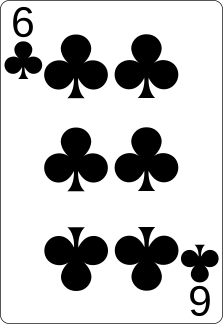
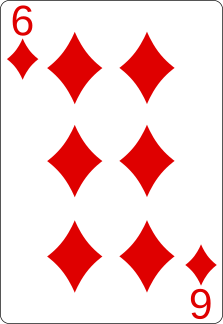
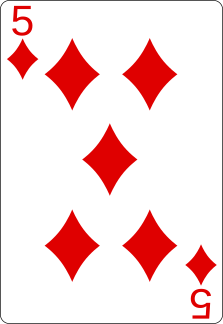
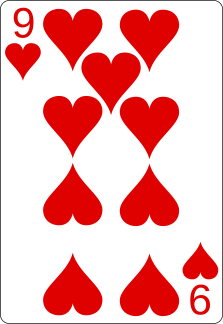
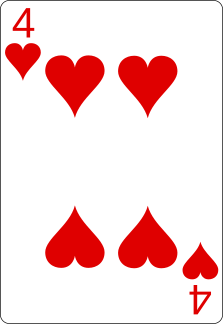
- Kings leave on their own (already 13). Every other card leaves in a pair that sums to 13 — for example 6+7, 4+9, Ace+Queen.
- Only uncovered cards (with nothing on top) can be played, plus the top of the waste.
- No pairs on the pyramid? Click the stock to turn a new card to the waste.
- Plan ahead: removing a card uncovers the two above it, so think about the order to avoid getting stuck.